Tag Archive for: Realty ONE Group Western Slope
There are so many great hikes in and around Grand Junction. But, for me, one of them towers above the rest as the best hike in Grand Junction.
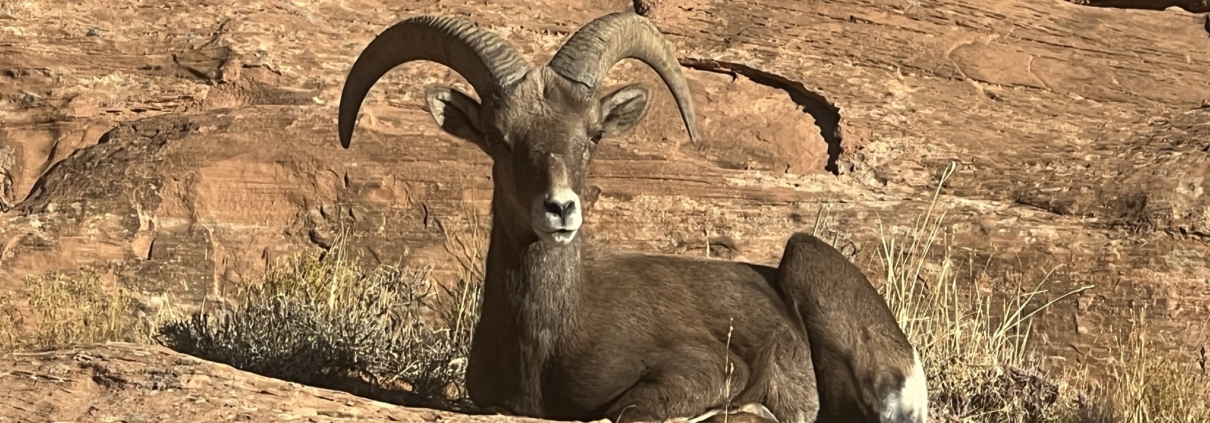
Independence Monument is iconic for Grand Junction. Independence Monument trail also has some of the most accessible and spectacular views of the cliffs, canyons and if you’re lucky, the resident flock of big horn sheep that graze the areas around the trails.
Cliffs along the Monument Trail
I pulled up to the parking lot for the first time, and figured it was just going to be another fairly standard trail hike. The view was pretty, but nothing to write home about. The surrounding areas were shrubby with sage brush, juniper and cactus. The single track trail was dusty tan and covered in fine, desert sand. Dry but not yet hot in the day, the trail led us along the old buffalo fencing that marks the boundary of the Colorado National Monument.
A fairly sharp turn around the base of the rising berm set our course southwest, and there rising in the distance was the tip top of Independence Monument still tiny against the canyon wall back drop. The sheer sandstone cliffs rose vertical in the orange morning light. We started walking up the trail steps, and I felt myself prickle with sweat. Past the frog-head rock. Occasionally people put smaller rocks in its mouth to give it teeth. I always look to see.
Chatting as we hiked, my friend and I skirted along the cliffs as we gained elevation towards the monument. Big horn sheep watched us and chewed slowly as we passed. They are typical residents of the hike, and clearly used to humans. I couldn’t help but stop to take too many pictures of them.
The trail zig zagged as we went up and up still and took another hard to turn to the right along the sheer band of cliffs. We would pass other fellow hikers from time to time. But, the tranquility and stillness of the morning air had me drifting in wonder at the surrounding nature.
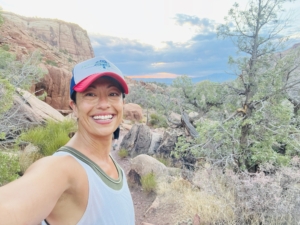
Sweating it out on the trail
We hiked closer and closer until Independence Monument towered above us. No climbing signs posted mark the season when the raptors are nesting. A quick 2.5 miles out and an even faster (it’s downhill) 2.5 miles back, the loop is a steady, sweaty spectacle of Grand Junction nature at its finest.
The only downside for me, is that it’s not dog friendly since the trails in the National Monument are pooch-free. If you’re looking for some great dog-friendly trails, I’d give Devils Canyon and the Fruita Paleo trails a try.
Check out the trail system and other info here: https://www.blm.gov/visit/fruita-paleo-area
If you’re looking for an easy to get to, moderate, breathtaking hike, Independence Monument loop is hard to beat. Find out more about it here: https://www.nps.gov/thingstodo/monument-canyon-loop-hike.htm
Oh, and I wouldn’t recommend it during summer days. It’s hot. Like, blisteringly hot. Any other time of year (including winter) is fantastic.
So, take a break from reading blogs and go out there and hike!
To your health,
Alanna
Alanna Spees, REALTOR®
Text/Call: (408) 497-3774
Connect with me on LinkedIn
Learn more about me and my services
The best way to reach me is to text directly!
Not quite ready to talk? No problem.
Check out my other articles on buying a home.
*All content is human generated and AI edited (because spell check is my friend).
©2025 Alanna Spees, Swift Water Investments, LLC. All rights protected.
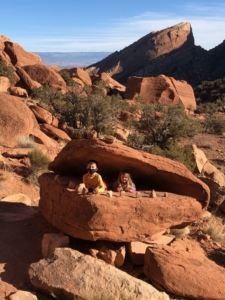
Frog Head Rock. Someone put kids it in today too (it was me!)
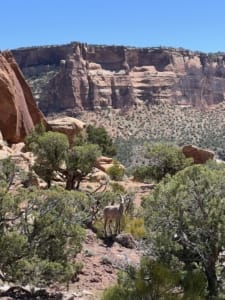
Camouflaged big horn
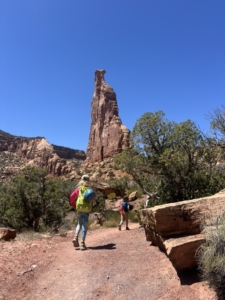
It’s family friendly

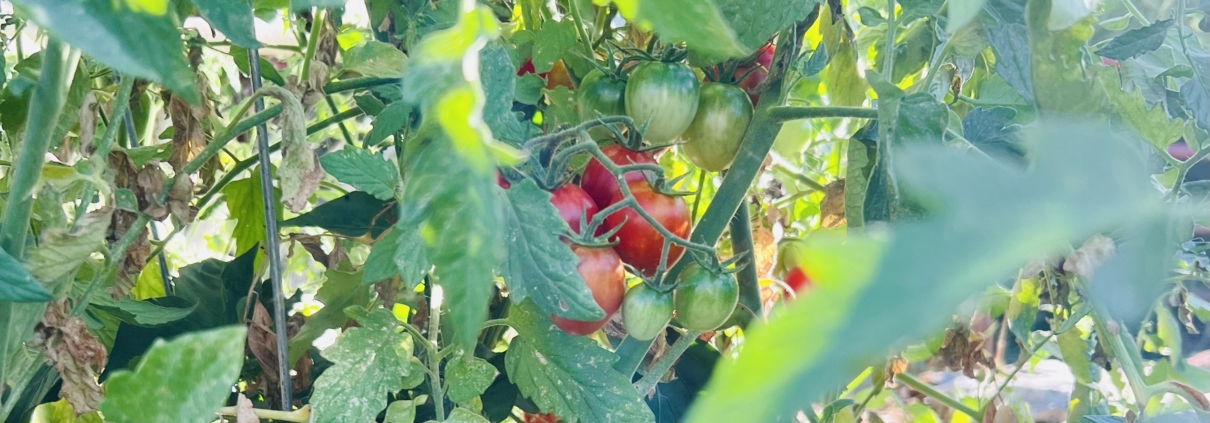
Boutique farms and homesteads: is it the right lifestyle for you?
Grand Junction and its surrounding areas have plenty of opportunity to have a farm, hobby farm, or homestead and plenty of elbow room away from close neighbors. There are a lot of great things about living in Grand Junction, and in my opinion, this could be one of the major benefits of exploring the different types of real estate opportunities in the area.
Grand Junction has a long history of agriculture. Large swaths of land and crops roll out over the valley giving plenty of great development for cattle, sheep, llamas, chickens and other livestock. Not to mention that there is a great deal of pride and love in the community for horses, trail riding and equestrian therapy.
As parcels of land have been divided into smaller acreage, the chance to have a private boutique-style farm has attracted many home owners (including myself) to the thought of working a little land, raising your own food, having farm fresh eggs and growing sustainable, organic produce. Owning boutique farms and homesteads is a lifestyle.
When I first moved to Grand Junction, I lived in a “normal” house on a little over a quarter acre of mowable, manicured yard. The neighborhood had detailed HOA rules, regulations, and no shortage of neighbors checking in to make sure that the yards were ship-shape. After about a year of living in this quiet, controlled setting, Oliver and I decided it was time to spread our little wings and seek out a more flexible lifestyle.
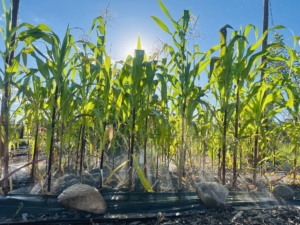
Corn being watered as it grows through the summer
We began looking at houses that had a few acres of land, limited HOA, and irrigation water. Side note, ready my post about why irrigation water is a BIG DEAL in Grand Junction.
Our real estate agent at the time was a wonderful woman with tons of experience, resources, and wisdom. After many months of hemming and hawing, we circled back around to a property that we had written off many months prior.
She had some advice for me that I WISH I had listened to. She said when you buy a house with land, you’re not just buying a house, you’re buying a lifestyle.
Grand Junction offers a great opportunity to develop boutique farms and homesteads along with sustainability.
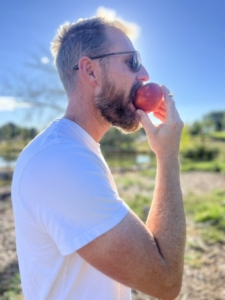
Enjoying a late season peach from our home orchard
This may seem very attractive, especially if you’re getting away from larger urban centers where this might not be available. But before you don your coveralls and roll up your sleeves, it’s important to consider a few things about this type of lifestyle to help determine if it’s right for you.
- Farming and homesteading is a lifestyle– When you’re considering purchasing a property with a little (or a lot) or land, it’s worth considering that you’re not just buying a house. You’re buying a lifestyle. From Spring to Fall, working a plot of land and/or tending to livestock is like having another job. There’s early season tasks to do to ensure a successful growing season. There’s tending through the summer months, and then no shortage of work to ensure your harvest is picked, processed, and stored for the winter.
- Equipment– Oliver says that there’s a right tool for every job. I never appreciated that until I became a small acreage farmer. My advice, get a tractor as soon as you can. It can do so many things that a little human can’t. Western Implement tends to offer a 0% APR 5 year loan on tractors! It’s a great way to get behind the wheel of a slow-moving, strong-working, farm-necessary Kubota tractor. Check them out. https://www.westernimplement.com
- Weeds– No, not weed (although we are Colorado). Giant kosha, goat heads, bind weed and so many more take lots of tending and time during the growing season. My free moments during the growing season are spent cursing at weeds as I sweat through the back breaking work of pulling them. It’s worth it, but it’s hard work.
- Pests– Between insects, birds, deer, and other things that like to get into crops, preventative pest control can be critical to your farming success. Organic farming and more holistic approaches are certainly desirable. There are lots of resources locally to help you design a strategy that aligns best with your farm, crops and philosophies.
- Harvesting– Having the manpower and hours to harvest the way you want can be an important part of feeling good about your farm. The harvest usually feels like it comes on like a river approaching a waterfall. As you paddle towards it, you know it’s coming and you feel prepared. But, then it hits and you’re swamped with fruit and vegetables that need to be processed before they rot. Dry, can, freeze or pickle as soon as possible to ensure that your hard work doesn’t go to waste.
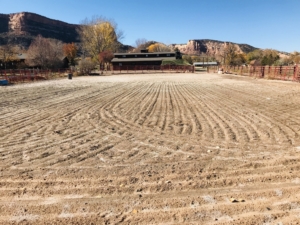
Plowing the arena to help combat weed growth and level the ground
There is of course great benefit to having a sustainable farming lifestyle with your own food, eggs (if you want chickens), honey (bees anyone?), and plenty of sunshine while getting your hands dirty.
For me, the bottom line is that you have to say no to other things if you want to say yes to a farming lifestyle. Sometimes, this is easier, and it’s a challenge. I would recommend taking some time to think about if this lifestyle is a good choice for you. It definitely has its benefits, and can be a fantastic way to tap into more holistic living.
Ready to find out more about small boutique farms and homesteads in Grand Junction?
Call or text me directly to see what’s out there.
Cheers,
Alanna
Alanna Spees, REALTOR®
Text/Call: (408) 497-3774
Connect with me on LinkedIn
Learn more about me and my services
The best way to reach me is to text directly!
Not quite ready to talk? No problem.
Check out my other articles on my blog.
*All content is human generated and AI edited (because spell check is my friend).
©2025 Alanna Spees, Swift Water Investments, LLC. All rights protected.
Water Rights and Irrigation Water in Grand Junction are a Big Deal!
“The wars of this century…” (1900’s)… “were fought over oil.
The wars of the next century will be fought over water.”
– Ismail Serageldin, former World Bank Vice President
Here’s how water rights and irrigation water in Grand Junction can affect you as a homeowner, or should be considered if you’re thinking about becoming one.
I grew up in a 10 year long drought. Water, or lack thereof, was on everyone’s mind.
The big question that nobody could answer was when would the drought end?
What I remember from those years about water conservation was formative for me and how I still view water today. Water restrictions not only became law, but also was a daily practice of how we lived during that time.
The lawns turned brown and crispy. Nobody washed their cars. If there was some type of outside watering, it was with grey water from draining washing machines. Running the dishwasher was strictly out of the question. Bathing was done in a few inches in the tub, and everyone shared the water until it was used up (or so gross that we all agreed it was time to drain and refill). The phrase “If it’s yellow, let it mellow. If it’s brown, flush it down” was a common mantra that everyone subscribed to.
When we moved to Grand Junction, I was shocked at how much water was available.
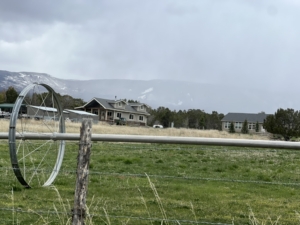
Sprinkler system set up running off of irrigation water
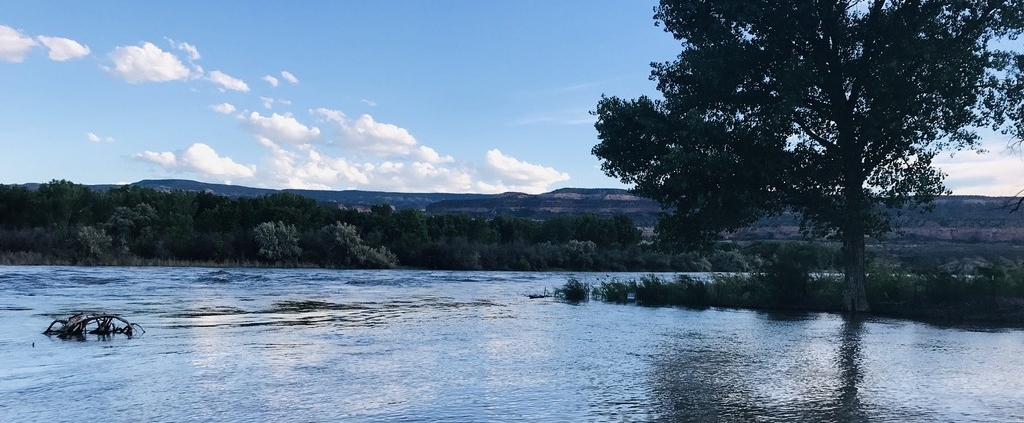
Often, I find myself thinking about the irony that I had to move to the desert to find water. The irrigation system in the Grand Valley is truly stupendous. When you fly in or out of the Grand Junction Regional Airport, you can see all the areas that the irrigation water flows to. Like a long, slender green oasis snaking its way through the dusty red surrounding hills, the Colorado River branches out through the established irrigation systems that feed different farms and neighborhoods.
Irrigation water doesn’t work the same throughout the valley, so it’s important to know the difference between the areas, neighborhoods and sometimes each individual house.
When I advise clients, one of the questions on my top 10 interview questions is how important are water rights and irrigation water in Grand Junction to you? This is a really important question when you’re thinking of owning real estate in the Grand Valley, and I’ll tell you why.
Irrigation water can save you a bundle if you’re trying to water a large yard, lots of grass, crops or other actively growing landscape. You can water with municipal water (from the city), but it can get spendy real quick.
If you’re thinking about how irrigation water might affect your home ownership, here’s a quick guide to how irrigation water across the Grand Valley works.
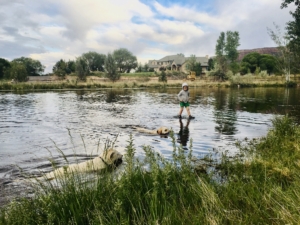
Flooded irrigation pond during monsoon is a setback for somethings like drainage, but great for other things like kids and dogs.
Home Owners Associations (HOAs) and Irrigation Water– Many HOAs have been established in different subdivisions for the sole purpose of managing the irrigation water for that particular neighborhood. The HOA tends to be minimal with very little involvement. Fees for these types of HOAs also tend to be fairly minimal, in the range of a hundred to a couple hundred dollars annually for the irrigation system and access to the water. In this case, the HOA typically owns the water rights, and each individual home owner gets access to that water through their HOA fees.
Water stock certificates– There are some areas in the Grand Valley like the Redlands that issue water stock certificates as ownership of water rights. Importantly, these water stock certificates ARE NOT attached to the land, meaning they can be purchased or transferred separate from real estate. Each certificate has a certain amount of allotted water usage. Typically, you can purchase available certificates to gain more legal access to water use.
Irrigation water that runs with the land– Some areas of the Grand Valley like Orchard Mesa have irrigation water that runs with the land. In this case, the water cannot be separated from the land, and the rights to use that amount of water will transfer when a home is purchased or sold.
Wells– Wells are fairly common in some of the surrounding areas in the Grand Valley. There are various limitations and guidelines for well use, new well permits and number of wells per acre. If you’re thinking about buying a property with a well (or may want to put one in), the Colorado Division of Water Resources https://dwr.colorado.gov/ is a great place to start gathering information.
Additionally, here is a quick go-to list of some of the Grand Valleys major irrigation water suppliers:
Grand Valley Irrigation Company https://www.grandvalleyirrigation.com
Grand Valley Drainage District https://thedrainagedistrict.org
Grand Valley Water Users Association https://gvwua.com
Palisade Irrigation District https://palisadeirrigationdistrict.org
Orchard Mesa Irrigation District https://omirrigation.com
Redlands Water and Power https://www.redlandswaterandpower.com
Want to learn more about water rights and irrigation water and how that affects your homeownership?
Call or text to find out more. Read my post about Boutique Farms and Homesteads.
To our global conversation!
Alanna
Alanna Spees, REALTOR®
Text/Call: (408) 497-3774
The best way to reach me is to text directly!
Connect with me on LinkedIn
Learn more about me and my services
Not quite ready to talk? No problem.
*All content is human generated and AI edited (because spell check is my friend).
©2025 Alanna Spees, Swift Water Investments, LLC. All rights protected.

We all try to work on work life balance, and being an entrepreneur is no exception. I think about the type of impact I’m striving to make through the real estate market in Grand Junction, and it’s not what you would expect. In fact, it’s not what I expected either.
I was at a pivotal place in my real estate career. I had been licensed for about 5 years, been a full-time REALTOR® for 18 months, and was experiencing a daily, heavy, weighed-down-in-the-mud feeling that I tend to get when I’m not really on a good path. After agonizing over it for months, I finally knew that I needed to make a change. Either I was going to change something, or doing nothing was going to change me.
But what is the best direction for change?
Don’t we all wrestle with this question from time to time as we walk the tight rope of work life balance? I’ve always been intrigued by people who can answer this question for themselves. Sometimes, that answer seems to come almost immediately. But, not for me.
So, I decided to spend time interviewing people to see what they deemed priorities in their lives.
I talked to friends, family, mentors, colleagues, random people in coffee shops, other parents at play groups, school administrators, local entrepreneurs, and I would all ask them the same set of questions:
-

Lily trying to be a lap dog.
How do you know if you’re on the right track in life?
- If you zoomed ahead to the end of your working career, what would be the most important impact you would have wanted to make?
- What holds you back from making changes in your career?
After all my interviewing, it repeatedly came down to two things:
If you’re not doing what you’re naturally built for, you’re not on the path to YOUR most powerful impact.
(And)
Don’t miss out on the moments with the people you love.
If you’re not doing what you’re naturally built for, you’re not on the path to your most powerful impact.
The person who really got me thinking about this was my 13 year old nephew. He wants to be an influencer on YouTube. I can’t blame him. It sure looks cool.
And, it got me stuck on the difference between influence vs impact.
When I think about influence, I think about persuasion. To influence another person is to coerce their way of thinking. Sometimes this looks like shiny lights, flashy promises, and the enticement of the perfect lifestyle. It all looks great, and the trap of comparison has us hustling to feel worthy of such glimmer.
To me, impact means lasting, positive change.
It doesn’t necessarily matter what you do, as long as you’re paying attention to what you’re naturally gifted at. I resisted this idea for years. I wanted desperately to believe that if I worked hard enough for long enough, I could do anything. So I did. I worked long hours and harder than my colleagues because I had to just to keep up. I wasn’t thriving. I was surviving. And because I was only surviving, I didn’t have the bandwidth to make a positive and lasting impact. I didn’t have a work life balance. After a lifetime of attempts at leaning into my weaknesses, I finally started to lean into my strengths. To learn more about my strengths, visit my profile on my sister website, Homes Sold for MORE™.
Almost like waving a magic wand, things started to click. I was making progress in my business, I had more time for my family, and for the first time in a long time, I was excited about my career. It hasn’t been perfect, and the road has been more like a loosely-grated back country road than a smooth, paved highway, but believe me when I say, you have strengths that will elevate your success.
At the heart of my lifestyle and business practices, is the aspiration of creating lasting positive impact for my family, friends, clients, colleagues and my community.
That’s why I take so much time with my family and friends. It also seeps over into how I chose to interact with my clients (especially in the early stages) to help them understand what is really in store for them through real estate, and more importantly, what effect that will have on them in the bigger picture.
I don’t use flashy catch phrases or hand waving to influence what you think. True impact comes from education and understanding so that you are empowered to make the best decision for you.
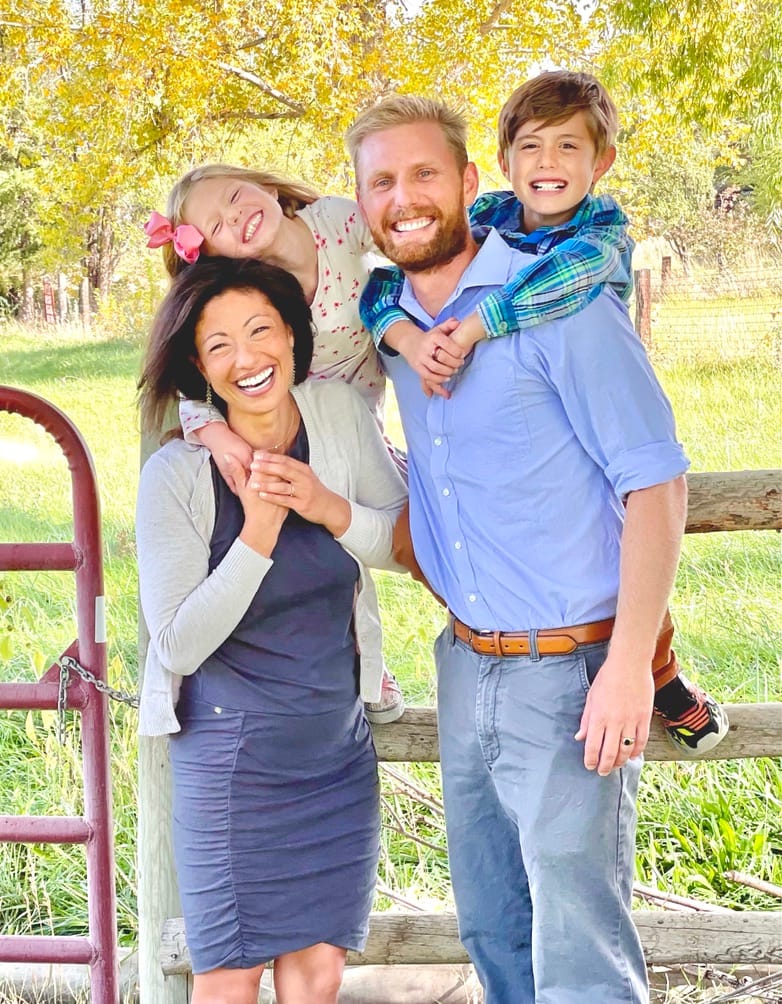
Family is fun, silly, challenging and messy. Savoring a moment of trying to get the kids to smile for a family photo.
Don’t miss out on moments with the people you love.
You’ll always remember spending time with your partner, family, and friends. You won’t remember that extra hour you spent in the office or that email you stayed up late to send.
Carving out time to spend with the people you love seemed to be one of the things said by everyone I interviewed. They all also said that this is easier said than done. I found myself torn on this as well. How can I carve out time when I need to be committed to my career and making money? Moments with loved ones don’t pay the bills.
Somedays, these moments are easier to achieve than others. Sometimes, tending to work needs does take the front row seat. For me, it’s been a slow progression towards balancing work responsibilities and unwaveringly making time for the people I love. But, I wholeheartedly believe now that working on a solid, satisfying work life balance is one of the most important things you can do for yourself.
Cheers to your powerful impact,
Alanna
Ready to learn more about my philosophies and business practices?
Call, text or email me directly.
Alanna Spees, REALTOR®
Text/Call: (408) 497-3774
[email protected]
Connect with me on LinkedIn
Learn more about me and my services
The best way to reach me is to text directly!
Not quite ready to talk? No problem.
Check out my other articles on my blog.
*All content is human generated and AI edited (because spell check is my friend).
©2025 Alanna Spees, Swift Water Investments, LLC. All rights protected.
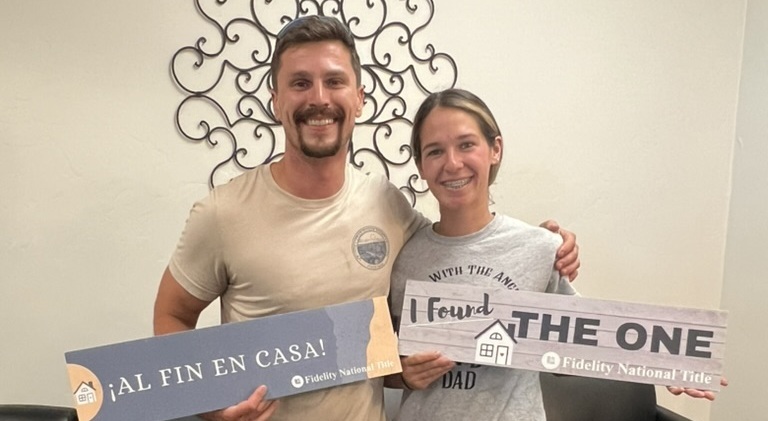
Who’s on your team?
If you are first time home buyers, or even if you’ve bought a home before but need a little refresher course on who will be helping you during the process, this article is for you.
The home buying process and all the chit chat you might be hearing can be confusing if not completely overwhelming.
But, don’t lose heart. Through some professional guidance, you can successfully buy your first home, and understand a lot more about the process and your professional team.
When I was growing up, my family lived in a small apartment, and when I would go to play at friends’ houses, they always lived in beautiful houses with yards. We’d run through sprinklers, catch toads in the grass, have outdoor picnics, and swing on their backyard playsets. Talk about the power of real estate. When I was around 8 years old, I made it a goal to own a house so I could live in a place that had a yard too. It’s one of the first goals I ever remember intentionally setting.
So, when I was 22, I bought my first home about 5 miles east of Boulder. My Realtor® led me through the overwhelming, confusing and frustrating process. I felt like I had no idea what was going on most of the time. My lender was a severe looking woman who told me not to worry when people tried to dissuade me from signing up for the interest-only loan she was putting me on.
I had no idea what I was getting myself into.
A year or two into the interest-only loan, my payment went up significantly, and I called the lender to find out why. Interest rates had increased, and I was only starting to understand that I had not been paying into the principal of my house at all. So, a few months and many conversations later with a different lender, I refinanced at a higher but fixed interest rate. Again, I made a goal. I would never again be persuaded or pushed into a deal that I didn’t understand.
This is what I want for all of my clients. To enter into a transaction with eyes wide open and a solid understanding of how it will impact their finances.
A home purchase is a big deal. That’s why there’s a whole team of professionals who will work with you during your purchase as first time home buyers. Each one of these professionals has their own area of expertise.
Your team of transaction specialists fall into three categories.
- Realtor® – Yep, that’s me! When we’re working on a transaction together, I’ll be here to advise, guide and advocate for you on matters related to the real estate itself. We look for houses that meet your criteria until we find the right one. I manage all matters of contracts, negotiations and coordinating with the title company and the lender until you successfully have your house keys in hand. I’m also well networked with lenders, contractors, tradesmen, home inspectors, city and county advisors to make sure you get all your needs covered.
- Lender – Your financial support. The lender you chose can be critical to your transaction success. They help discuss your financial options, and organize the financial pathway for you on your purchase. Your lender is going to provide the expertise to get you into the best loan vehicle for you.
- Title – The title company has two primary responsibilities. First, they make sure the home is free and clear to be sold by the people who are selling it. Second, they insure their work and if there’s any problems after you’ve purchased the home, they help resolve those issues. Title also manages the closing process, paperwork and recording of documents.
Choosing a Realtor® and a lender is a good place to start when you’re in the early stages of buying your first home. Typically, the title company is chosen later in the process (and often by the seller).
When you’re interviewing Realtors®, especially as first time home buyers, make sure that you feel comfortable with the amount of time and effort taken to answer your questions and walk through the process.
Not sure where to start when choosing your transaction team? Want to interview local lenders to find one that is a good fit for you?
Call or text me and we can talk it over with no pressure and strings attached.
Just good information to get you on your way.
To your success,
Alanna Spees, REALTOR®
Text/Call: (408) 497-3774
The best way to reach me is to text directly!
Send me an email
Connect with me on LinkedIn
Learn more about me and my services
Not quite ready to talk? No problem.
Check out my other articles on buying a home.
*All content is human generated and AI edited (because spell check is my friend).
©2025 Alanna Spees, Swift Water Investments, LLC. All rights protected.

In a dynamic market of lender choices, how do you know which one will be the right one for you?
To choose the best lender for your investment purchase is one of the critical keys to success!
When you’re looking to purchase a home, the extensive world of lending can quickly get overwhelming. There are lenders everywhere, and you may be wondering which one is best for you during this transaction.
In a nutshell, I recommend choosing a local lender who knows your market, provides a competitive rate, and can stay on a contract timeline (usually this means acting quickly). Other factors to consider are the type of loan(s) the lender can offer and special incentives that will sweeten the deal.
We all work hard.
We work hard for our money, how to balance our time, and how to make progress to give us an edge in the rat race.
So, when a client comes to me to start a conversation about real estate investing, it is always SO exciting. They have financial goals, hopes, dreams and a twinkle in their eyes. And rightly so. They’re getting ready to level up, and they want to talk about houses.
The first question I ask: Have you chosen a lender yet?
The answer I often get: The distinctive chirping sound of crickets.
I don’t mean to catch my clients off guard, and it’s an easy step to miss when there’s shiny houses out there just waiting to be explored.
The best way to set yourself up for success when you’re getting ready to invest (or think about buying a home for yourself), is to start by choosing the best lender for you and your purchase.
Lenders have guidelines that they have to follow according to law, but depending on their financial institution, they may have different incentive programs for various types of purchases. If you’re looking for an investment property, you should focus on investment-related questions.
Here’s a quick guide to get you started on some questions to ask a lender when you’re looking for an investment property.
- How much money do I need to put down for an investment property? Usually, this is somewhere between 25-35% of the purchase price, a sizable increase for a primary residence. But, this amount will vary per lender, so it’s important to know how much cash you’ll need to bring to the table.
- What is the interest rate on investment properties? Unlike a primary residence (the home you’re going to live in), loans on investment properties usually come at a higher interest rate.
- Length of the loan- Does the lender offer different loan lengths that may offset cost or pay down principal sooner? Typically, the shorter the loan, the higher the monthly payment but the less you’ll pay in interest.
- DSCR or other non-standard loans– Debt Service Coverage Ratio loans (DSCR) loans are specific to investing. The skinny is that the loan is based on the income potential of the property being purchased instead of the qualifying capacity of the borrower. In other words, if the house looks like it will make money, it may qualify for a DSCR loan.
- Incentives– What else can the lender offer? Are they giving cash back, a percentage towards closing costs, an opportunity to refinance within a timeframe without closing costs, percentage buy downs? All of these incentives can really add up to keep money in your pocket from the get go.
Need a list of local lenders to interview?
I have a great list of trusted lender partners that I’m ready to share.
Alanna Spees, REALTOR®
Text/Call: (408) 497-3774
The best way to reach me is to text directly!
Send me an email
Connect with me on LinkedIn
Learn more about me and my services
Not quite ready to talk? No problem.
Check out my other articles on buying a home.
*All content is human generated and AI edited (because spell check is my friend).
©2025 Alanna Spees, Swift Water Investments, LLC. All rights protected.
Balancing the Books on Real Estate Investing
There seems to always be hype around owning investment properties. Proponents of real estate investing tout that this is the best way to create secure passive income and work towards generational wealth. It all looks fantastic and straight forward: find a good property, put a little money into it to make it rental ready, throw in a super responsible tenant, and voila, you’re off to the races.
But, what about if and when things go off track, maintenance costs accumulate, tenants can’t pay rent, taxes and insurance increase, vacancy goes up? How much does it really cost to own investment properties?
This is not an easy question to answer. Like so many other things, what it actually costs to own rental properties can fluctuate dramatically with the type of property you’re buying, market conditions, rental rates and other factors like deferred maintenance.
In addition to actual monetary expenses, the amount of time and energy you may need to put into an investment property can also take a toll.
It’s critical to run the numbers first to make sure that your head thinks it’s a good financial investment before you get your heart set on a property.
When I’m considering purchasing an investment property, I spend some time creating estimates on costs to determine if the property will likely be profitable and how long it will take to get there.
Here’s some quick, back of the napkin math I use to evaluate a property before I get serious about it.
Income
- Market rate monthly rent– Isn’t this why we’re doing this?! Let’s get that cash flow flowing. How much can you rent the property for at the current fair market rate? This will vary depending on the type of rental you’re planning on. For example, if you’re thinking of an unfurnished house with a 12 month lease, your monthly rent will likely be lower than a furnished vacation rental. My advice, take a look at the properties currently on the market to figure out where the ball park market rent is landing. Don’t forget to reevaluate your rental rate if the market changes…because it will!
- Other amenities available for purchase– Offering any other amenities that will add to your rental income? Storage, bike parking, garage, etc.
Expenses
- Mortgage– How much will the money payment be if I take a mortgage.
- Insurance– Will insurance be included in the mortgage payment. Will I need any special types of policies like flood insurance? Is the property in a hard-to-insure area that would make the policy super expensive?
*Pro-tip: Before you even offer on a property, talk to your insurance rep to make sure there won’t be any hiccups down the road.
- Taxes– Are property taxes being paid through the mortgage escrow account or will you need to set money aside for these?
- Utilities– Are you paying for utilities (some or all) or will your tenant(s) be paying?
- Start Up Capital– Will you need to put any money into the property before it makes its first buck?
- Maintenance and repairs– Generally, I set aside 8% of the gross income per month for maintenance and repairs. This may need to be higher or lower depending on the location, age and function of the property.
- Turns– If you’re planning on doing a longer lease, then in theory, you should need to turn the property over less often. This can save on turns especially if you find tenants who tread lightly on the home. However, if you’re thinking of doing a short term vacation rental (STVR) or shorter leases, turns can really add up.
- Furnished or unfurnished– Depending on the market, having a furnished rental can attract higher paying tenants like travelling medical professionals or executives. This requires you to cough up a bit more start up capital, but may be worth it depending on your target tenant.
- Property Management (PM)– In the Grand Valley, property management companies typically take about 10% of gross monthly income. That puts less money in your pocket, but also may give you less headaches (or maybe that’s just me). If you’re thinking of using a PM, make sure you know the terms and how much this will cost you before you sign a contract.
- Carrying cost– If your rental market is fairly slow, factor in what it will cost you to pay all the expenses for the property for the months it will take to rent it, turn it or get it ready to market. Oh, and I include lawyer fees in carrying costs too.
On first glance, the expense list may seem to greatly overshadow the income list.
That is why it’s SO IMPORTANT to get a realistic estimate of your expenses vs. income.
If the income is greater than your expenses, that’s a good indication that the property has promise. I’ve had clients be all cash flow focused, or some who tell me they’re happy with the equity increase as long as the property is breaking even (income = expenses).
Take a moment to consider your investment goals. Are you looking for cash flow, equity growth or both? You might enjoy reading my post about investment goals.
Interested in properties that might help you meet your goals? I can set up a no-pressure search that will alert you when properties that meet your criteria become active.
Drop me a line to get your search started.
Your property investment specialist,
Alanna
Alanna Spees, REALTOR®
Text/Call: (408) 497-3774
The best way to reach me is to text directly!
Send me an email
Connect with me on LinkedIn
Learn more about me and my services
Not quite ready to talk? No problem.
Check out my other articles on investing strategy.
*All content is human generated and AI edited (because spell check is my friend).
©2025 Alanna Spees, Swift Water Investments, LLC. All rights protected.
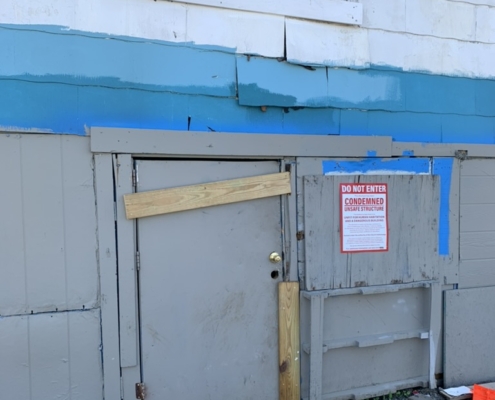
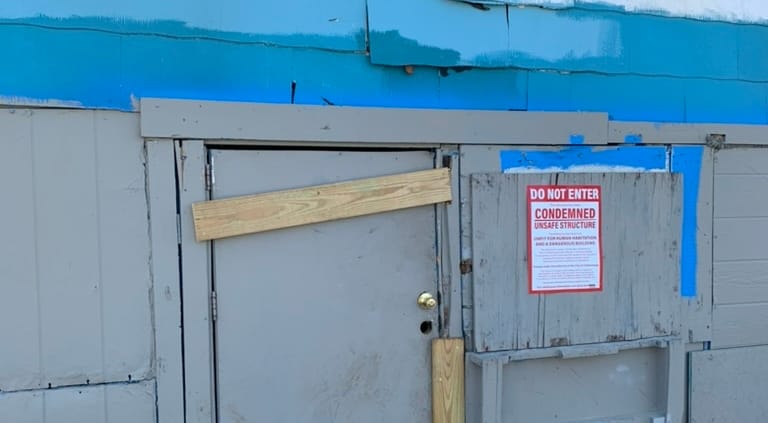
Make sure you know what the actual capital investing is to get a property ready to market. Think twice to make sure it’s in your budget and your best interest.
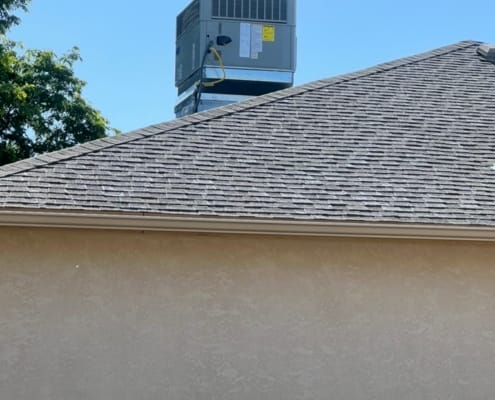
Utility repairs and replacements can be spendy and fast. Take a look at make, model, year and any maintenance records. And if you’re not sure, have a contractor come help. Usually, they’re happy to help evaluate.
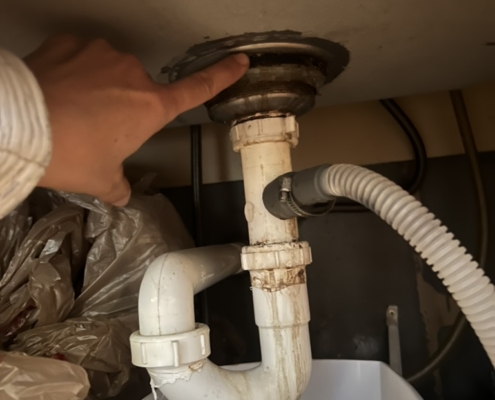
Leaks and plumbing can be a huge cost, especially when it comes to water damage.
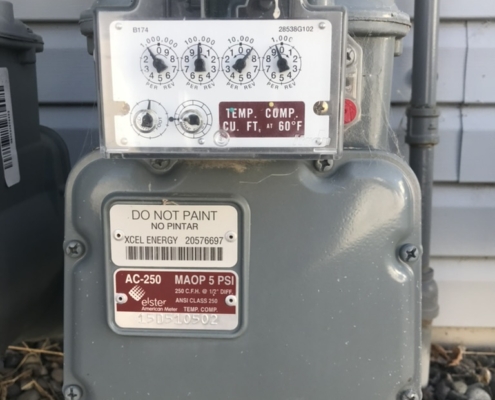
Monthly utility cost can give you a good idea about how much you or a tenant will be paying for all the utility basics.

