Water Rights and Irrigation Water in Grand Junction
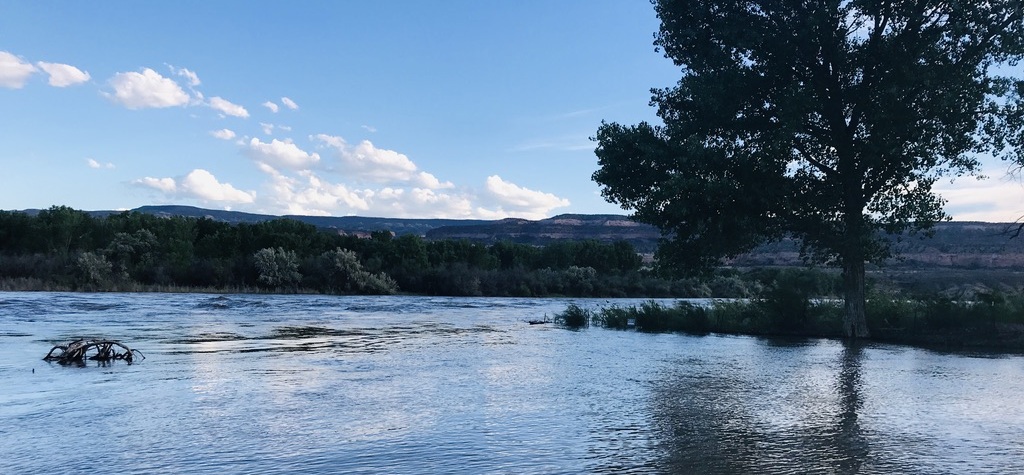
Water Rights and Irrigation Water in Grand Junction are a Big Deal!
“The wars of this century…” (1900’s)… “were fought over oil.
The wars of the next century will be fought over water.”
– Ismail Serageldin, former World Bank Vice President
Here’s how water rights and irrigation water in Grand Junction can affect you as a homeowner, or should be considered if you’re thinking about becoming one.
I grew up in a 10 year long drought. Water, or lack thereof, was on everyone’s mind.
The big question that nobody could answer was when would the drought end?
What I remember from those years about water conservation was formative for me and how I still view water today. Water restrictions not only became law, but also was a daily practice of how we lived during that time.
The lawns turned brown and crispy. Nobody washed their cars. If there was some type of outside watering, it was with grey water from draining washing machines. Running the dishwasher was strictly out of the question. Bathing was done in a few inches in the tub, and everyone shared the water until it was used up (or so gross that we all agreed it was time to drain and refill). The phrase “If it’s yellow, let it mellow. If it’s brown, flush it down” was a common mantra that everyone subscribed to.
When we moved to Grand Junction, I was shocked at how much water was available.
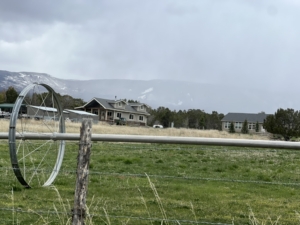
Sprinkler system set up running off of irrigation water
Often, I find myself thinking about the irony that I had to move to the desert to find water. The irrigation system in the Grand Valley is truly stupendous. When you fly in or out of the Grand Junction Regional Airport, you can see all the areas that the irrigation water flows to. Like a long, slender green oasis snaking its way through the dusty red surrounding hills, the Colorado River branches out through the established irrigation systems that feed different farms and neighborhoods.
Irrigation water doesn’t work the same throughout the valley, so it’s important to know the difference between the areas, neighborhoods and sometimes each individual house.
When I advise clients, one of the questions on my top 10 interview questions is how important are water rights and irrigation water in Grand Junction to you? This is a really important question when you’re thinking of owning real estate in the Grand Valley, and I’ll tell you why.
Irrigation water can save you a bundle if you’re trying to water a large yard, lots of grass, crops or other actively growing landscape. You can water with municipal water (from the city), but it can get spendy real quick.
If you’re thinking about how irrigation water might affect your home ownership, here’s a quick guide to how irrigation water across the Grand Valley works.
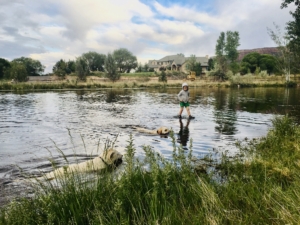
Flooded irrigation pond during monsoon is a setback for somethings like drainage, but great for other things like kids and dogs.
Home Owners Associations (HOAs) and Irrigation Water– Many HOAs have been established in different subdivisions for the sole purpose of managing the irrigation water for that particular neighborhood. The HOA tends to be minimal with very little involvement. Fees for these types of HOAs also tend to be fairly minimal, in the range of a hundred to a couple hundred dollars annually for the irrigation system and access to the water. In this case, the HOA typically owns the water rights, and each individual home owner gets access to that water through their HOA fees.
Water stock certificates– There are some areas in the Grand Valley like the Redlands that issue water stock certificates as ownership of water rights. Importantly, these water stock certificates ARE NOT attached to the land, meaning they can be purchased or transferred separate from real estate. Each certificate has a certain amount of allotted water usage. Typically, you can purchase available certificates to gain more legal access to water use.
Irrigation water that runs with the land– Some areas of the Grand Valley like Orchard Mesa have irrigation water that runs with the land. In this case, the water cannot be separated from the land, and the rights to use that amount of water will transfer when a home is purchased or sold.
Wells– Wells are fairly common in some of the surrounding areas in the Grand Valley. There are various limitations and guidelines for well use, new well permits and number of wells per acre. If you’re thinking about buying a property with a well (or may want to put one in), the Colorado Division of Water Resources https://dwr.colorado.gov/ is a great place to start gathering information.
Additionally, here is a quick go-to list of some of the Grand Valleys major irrigation water suppliers:
Grand Valley Irrigation Company https://www.grandvalleyirrigation.com
Grand Valley Drainage District https://thedrainagedistrict.org
Grand Valley Water Users Association https://gvwua.com
Palisade Irrigation District https://palisadeirrigationdistrict.org
Orchard Mesa Irrigation District https://omirrigation.com
Redlands Water and Power https://www.redlandswaterandpower.com
Want to learn more about water rights and irrigation water and how that affects your homeownership?
Call or text to find out more. Read my post about Boutique Farms and Homesteads.
To our global conversation!
Alanna
Alanna Spees, REALTOR®
Text/Call: (408) 497-3774
The best way to reach me is to text directly!
Connect with me on LinkedIn
Learn more about me and my services
Not quite ready to talk? No problem.
*All content is human generated and AI edited (because spell check is my friend).
©2025 Alanna Spees, Swift Water Investments, LLC. All rights protected.